
Fly Fishing in Minnesota: Why the Answer Isn’t Trout
If you’re looking into fly fishing in Minnesota, you’ve probably already landed on trout. Search it and you’ll get the Driftless, maybe the North Shore, and not much else. I’ve fished both. They’re worth doing, but they aren’t the best fly fishing this state has, and it isn’t particularly close.
I’m Steve Washburn, the guide behind NorthFish Angling. I run guided fly fishing and light tackle trips for smallmouth on the Upper Mississippi and Crow Wing rivers out of Brainerd, so you know where my bias sits. What follows is still an honest accounting — four fisheries, what each one actually gives you, and how to pick the one that fits what you’re after.
Minnesota Has Four Fly Fisheries, and Most People Only Know One
Trout in the Driftless. Steelhead on the North Shore. Carp and panfish in the metro. And river smallmouth through central Minnesota. Four completely different kinds of fishing, four different seasons, four different skill sets. The first one gets all the attention because it looks the most like what people picture when they picture fly fishing.
The Driftless: Small Water, Small Fish
The Driftless is the southeast corner of the state — spring creeks, limestone bluffs, brown and brook trout. It’s pretty country and it fishes clean.
Here’s my honest read: Minnesota trout fishing is subpar compared to the Big Horn or the Missouri out in Montana. The fish are much smaller, and the good stretches are often crowded. If you’re measuring a day by size and quantity of fish, it’s hard to justify the drive.
That said, I think a lot of guys who fish the Driftless aren’t really measuring it that way. They’re into the parts of fly fishing that aren’t catching — community, small water, light rods, the ritual of it. That’s a legitimate thing to want. It just isn’t the same thing as going somewhere to catch big fish.
The North Shore: Steelhead, and a Hard Way to Earn One
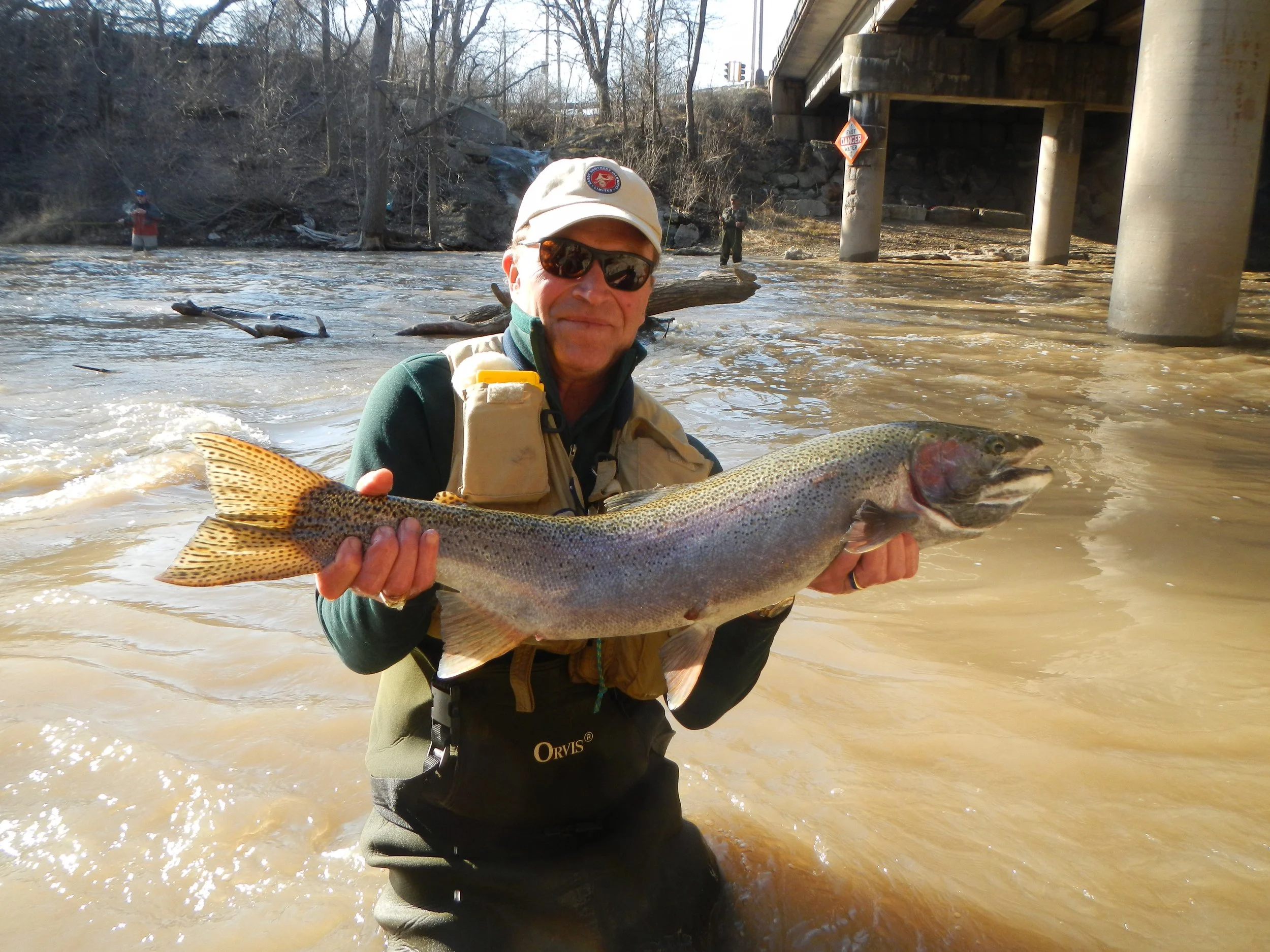
Lake Superior tributaries in spring. Steelhead.
Steelhead fishing here is a lot like the trout fishing, in that the appeal isn’t the numbers. Cold weather, cold water, plenty of anglers, and very few fish landed per day. One steelhead in a day is a success. Blank days are normal — not unusual, normal. Rain, river flow, and whether the fish have moved all play a huge part, and none of it is in your control.
Skilled anglers get humbled up there regularly. If you want that, go. If you’re taking one fly fishing trip in Minnesota this year and you want a lot of action with trophy fish, this probably isn’t where you want to go.
The Metro: Carp and Panfish, Closer Than You Think
I’ll be straight with you — I haven’t fished it. Carp on the fly in the Twin Cities has a real following, and people who do it well say it’s some of the most technical sight fishing in the country. Panfish and largemouth on poppers are genuinely fun and about as accessible as fishing gets.
I can’t speak to it from experience, so I won’t pretend to. But it’s there, it’s cheap, and it’s twenty minutes from a lot of people’s houses.
Central Minnesota Rivers: The Smallmouth Fishery Nobody Talks About
The Mississippi above the metro isn’t the river most people picture. From Elk River all the way up to Brainerd it’s rock, riffle, and current — smallmouth water, section after section of it. A lot of good anglers and guides work that run, and for good reason. Monticello, Clearwater, St. Cloud, Sartell, Little Falls: any one of those stretches will give you a real day of fishing. The Crow Wing comes in above Brainerd and does the same thing on smaller water.
Here’s where I’ll plant my flag, though. If what you’re after is a trophy fish, the best water in that whole run is the forty-plus miles between Little Falls and Brainerd — five distinct sections, two hours north of the Twin Cities, and the water I guide. Fish downstream of Little Falls and you’ll catch smallmouth, plenty of days a lot of them. Up here the average fish is bigger, and a twenty-inch fish is something you can plan a day around instead of a story about that one time.
Ask me to name the three best smallmouth rivers in the country and two of them are the Upper Mississippi and the Susquehanna in Pennsylvania. That’s not a local guide talking up his own water — it’s where this river belongs in the conversation. The Upper Mississippi is to smallmouth what the Deschutes is to steelhead, what the Missouri is to trout, what Louisiana is to redfish.
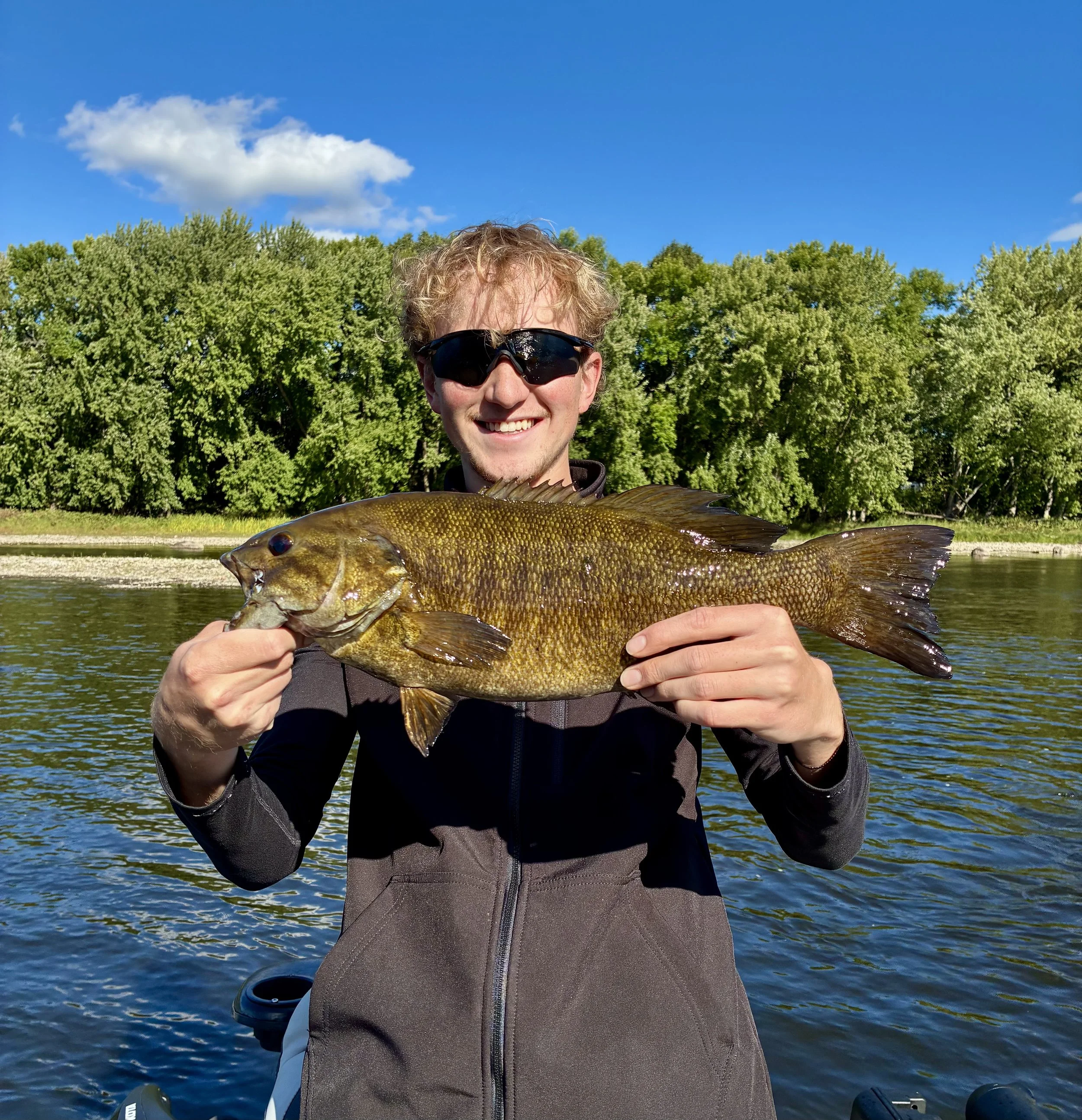
Typical fish here run 15 to 19 inches. Twenty-inch fish are common. The Minnesota DNR will tell you what anyone who’s hooked one already knows — pound for pound they’re among the strongest freshwater fish swimming.
And they eat differently. Smallmouth eat meat. Trout eat bugs. That difference is the whole thing: a much more aggressive eat, and a much harder fight once you’re connected.
One more thing, because I’d rather you hear it from me than find out later — you don’t need a boat to do this. Between Brainerd and Elk River there’s a lot of walk-in wade access. Kayak fishing might be the single most effective way to catch these fish, because it’s so quiet. A jet boat gets you to more water in a day. It isn’t the price of admission.
How to Choose Where to Go Fly Fishing in Minnesota
Season. Driftless trout runs spring through fall. North Shore steelhead is a narrow spring and fall window. Smallmouth is May through October, with some great summer when lake fishing slows down.
Difficulty. Steelhead is the hardest by a wide margin. Driftless trout rewards a delicate presentation. Smallmouth is forgiving enough for a first-timer and deep enough that I’m still learning the river after years on it.
Size of fish. This one isn’t close. A twenty-inch smallmouth is a realistic goal on a given day here. A twenty-inch Minnesota trout is the fish you tell people about for a decade.
Access. Metro is the easiest. Driftless means a drive for most people. Central Minnesota rivers have public access all along them.
What I Tell People Who Are Deciding
Someone calls and he’s weighing a trout trip down south against a day on the river with me. Here’s what I actually say: you’re comparing a world-class trophy smallmouth fishery against a below-average trout fishery. You’ll catch more fish and you’ll catch bigger, harder-fighting fish. There’s no comparison.
The biggest misconception I hear is that smallmouth are dumber — easier to figure out than trout. They aren’t. They’re every bit as hard to pattern, and there are far more of them per mile of river than there are trout per mile of creek. Being an aggressive predator is what makes a smallmouth a great game fish. It doesn’t make it a stupid one.
Trips run $600 for a full day (6 hours) or $400 for a half day (4 hours), two anglers maximum, May through October. Catch and release, artificial baits and flies only.
READY TO FISH MINNESOTA SMALLMOUTH?
Book Your Trip
→ Book online at northfishangling.com
→ Email: steve@northfishangling.com
→ Call or text: 612-360-7609
Want to go deeper on either river? I’ve written up the Upper Mississippi and the Crow Wing separately — what the water looks like, when each one fishes best, and what to expect on a day out.
